Showing posts with label bacon. Show all posts

Sunday, November 24, 2013

Beef Stew with Bacon & Vegetables

I’ve known for a few days that it was going to be cold today. And by cold, I don’t mean “Waaahhh, a coat ruins this outfit,” I mean “I am legitimately concerned for my extremities.”

As much as I complain about the cold, I can’t help but love the excuse to spend a day next to the stove. Yesterday, when the weather wasn’t so frostbitey, I planned in advance and bought the ingredients I needed to make a lovely slow-cooked beef stew.

This recipe makes a lot—and by “a lot,” I mean “Hey, East Coast, I’ve got enough for all of you!” Nah, just kidding—but this recipe definitely yields enough for 8-10 cold, hungry people! And it has plenty of healthy vegetables, which I think makes up for the fact that bacon fat is the key to the best flavor.


Beef Stew with Bacon & Vegetables

4-5 slices of thick-cut streaky bacon, sliced into ½” pieces
1.5 lbs. chuck steak, cut into bite-sized pieces
1 large onion, diced
3 leafy stalks celery, diced, leaves set aside
3-4 carrots, diced
3 juicy tomatoes, diced
2-3 c. dry red wine
1 32-oz. box organic low-sodium beef broth*
1-2 turnips, diced
3-4 red potatoes, diced
1 large bunch kale, ribs removed, leaves torn into pieces
1 t. dried thyme (or half the amount fresh)
1 t. crumbled dried sage leaves (or 3 fresh leaves, minced)
½ t. ground ginger
½ t. garlic powder
1 lb. green beans, sliced into 1-inch lengths
Smoked sea salt, to taste
Cracked black pepper, to taste


Before you even start chopping, make sure you have a huge pot (I used my 6.75 quart Le Creuset risotto pot). Otherwise, you’re screwed.

Just before adding the liquid
Once your pot is ready, add the bacon over medium heat and cook it until the fat is melted away and the meaty bits are cooked but not burnt. Then, add the beef chunks and cook, stirring frequently, for about 5 minutes until the beef chunks are mostly browned. Then, add the onion, carrots, and celery stalk (make sure to keep the leaves separate and set them aside—they will be added later). Cook for about 5 more minutes, stirring frequently, until the onion has softened a bit.

Next, add the tomatoes (I added a few yellow cherry tomatoes, as you can see in the photo) and 1 cup of the wine. Turn the heat to high, and cook until the wine has reduced and most of the liquid has evaporated.

Now, add one more cup of wine and the beef broth, the turnips, potatoes, and kale, and the thyme, sage, ginger, and garlic. Reduce heat to medium-low and cover. Cook for 30 minutes, stirring occasionally.

Once the kale is completely wilted, add the green beans. If it seems dry, add the remaining wine (if you don’t need to add it, you should probably drink it). Cook for about 5 minutes until the green beans are cooked, then add the smoked sea salt and the cracked pepper. Give it a few good stirs until it is well-blended, then serve piping hot. This dish will stick to your bones!


* If you use pre-made beef broth, make sure to use low-sodium, and preferably organic. Of course, if you have your own beef broth, even better!

Not the prettiest, but it's wicked good!

Tuesday, December 18, 2012

Feast of the Seven Fishes: Vodka-Braised Calamari with Celery and Tomatoes

It’s almost time for the Feast of the Seven Fishes! Stemming from the Catholic tradition of abstaining from meat on Christmas Eve, many Italians create elaborate meals featuring seven seafood dishes. If you’re in the mood for a less-traditional preparation, try this calamari dish that I created this weekend.

My inspiration for this recipe arrived while I wrestled with whether or not to make a bottle of chile-infused vodka—I wondered what I could do with the spicy booze other than pour it into bloody marys, and I decided to try cooking calamari in vodka with some chiles. The result? A fantastic, fresh-tasting sauce that would be a delight on any Christmas Eve table! If you’re bored with the same old calamari recipes, give this one a shot!


Vodka-Braised Calamari with Celery and Tomatoes

16 oz. / 455 g dry linguine
3 slices streaky bacon (optional)
1 T. butter (if omitting bacon, increase to 2 T. butter)
2 leafy stalks celery, minced (reserve minced leaves)
2 shallots, minced
2 serrano chiles, minced
2 bay leaves
3 medium tomatoes, chopped
1/3 c. golden raisins
1 T. capers in salt
1 c. vodka
1.5 lb. calamari (I prefer a 50/50 mix of tubes and tentacles)
Generous splash olive oil


First, cook the pasta in heavily salted water. In the meantime, if using the bacon, cook the bacon slices in a large, heavy-bottomed pot over medium-high heat until crisp, then remove and place on paper towels. Do not drain the bacon fat from the pot. Add the butter and let it melt (if not using the bacon, simply add the butter to the pot and let it melt), then add the minced celery stalk (keep the minced celery leaves set aside for later), shallot, chiles, and bay leaves. Cook, stirring frequently, for 3-5 minutes or until the shallot and celery are translucent.

Next, add the tomatoes, raisins, capers and vodka. Stir, scraping up any browned bits of bacon from the bottom of the pot. Lower heat to simmer and cook for 8-10 minutes.

When the pasta is just about ready and the tomatoes have simmered in the vodka, add the calamari to the pot with the vodka and tomatoes and raise the heat to medium-high. Cook, stirring frequently, for 1-2 minutes.

Drain the pasta from the cooking water and add the cooked pasta to the pot with the vodka and calamari. Add a generous splash of olive oil, and stir gently until blended. Serve the pasta in individual bowls, and garnish by sprinkling with the minced celery leaves.

* To purchase ingredients used in this recipe, click the picture below:


* Nutritional info: serves six. 610 calories, 13.5 g fat, 68 g carbohydrates, 30 g protein.


Saturday, November 17, 2012

Trout in Red Wine with Chiles, Cocoa, and Hazelnuts

If you have a fisherman in the family, surely you’re familiar with cooking trout in lemon butter or simply grilling them over a campfire. In Northern Italy, where trout is plentiful, it is often cooked red wine with lemon, cloves, parsley and dill. In France, Trout Amandine, a preparation featuring lots of butter and toasted almonds, is king. In Mexico, fresh trout are grilled with chiles, garlic, and lemon or lime juice.

Unable to decide which of these three traditional preparations I wanted to use on some fresh rainbow trout I scored at Mercato del Mare, I decided not to make a decision, but to whip together a recipe combining all three recipes. Cooked in red wine, topped with toasted hazelnuts, and simmered with chiles, garlic, and a bit of unsweetened cocoa, which adds depth to this dish just as it does in traditional Mexican molĂ© sauce, you get to experience the best of three very different trout dishes!


Trout in Red Wine with Chiles, Cocoa, and Hazelnuts

For the trout:
2 whole trout, cleaned
1 clove garlic, minced
1 cup / 235 mL red wine vinegar

For the sauce:
2 slices streaky bacon, chopped
1 tablespoon / 15 g butter
1 large shallot, minced
2 cloves garlic, minced
1-2 dried chiles, crushed
2 bay leaves
A few sprigs fresh thyme
1 cup / 235 mL dry red wine, such as Chianti or Montepulciano d’Abruzzo
Juice and rind of 1 lemon
1 teaspoon / 5 g unsweetened cocoa powder*

To serve:
Handful minced flat-leaf parsley
¼ cup / 60 g toasted hazelnuts
2 tablespoons / 30 g. minced pea shoots
Salt
Freshly ground black pepper
Hazelnut oil*


First, place the trout in a glass or ceramic dish. Pour in the wine and minced garlic, shake, and set aside to marinate for a half hour.

While the trout is marinating, prepare the sauce. Using a heavy-bottomed pot large enough to fit both trout, heat the butter over medium-high heat, then add the bacon. Cook for 3-5 minutes or until the bacon begins to crisp, then add the shallot, garlic, and chiles and continue to cook until the shallot begins to soften. Add the bay leaves, thyme, red wine, lemon juice and rind, and cocoa powder. Cook for 8-10 minutes, stirring frequently to loosen up any browned bits of bacon at the bottom of the pot.

While the wine sauce is cooking, remove the trout from the vinegar and discard the vinegar and garlic. Place the trout in the pot with the wine sauce, shake the pan a bit to distribute the sauce over the trout, then reduce heat to medium-low and cook, covered, for 15-20 minutes, or until the trout flakes easily.

While the trout is cooking, combine the parsley, hazelnuts, pea shoots, salt and pepper in a small bowl.

To serve, use a fish spatula to transfer each trout to a warmed plate. Sprinkle the inside of each trout with the parsley/hazelnut/pea shoot mixture, and sprinkle on top as well. Drizzle each trout with hazelnut oil, and serve piping hot alongside roasted potatoes.

* To purchase ingredients used in this recipe, click the link(s) below:

Scharffen Berger Cocoa Powder (Google Affiliate Ad)

La Tourangelle Roasted Hazelnut Oil (Google Affiliate Ad)

Nutritional information: serves two. 711 calories, 25 g fat, 10 g carbohydrates, 45 g protein.


Monday, June 4, 2012

Conch Chowder – The Boston Version

Of all the foods I tried in Key West last week, Conch Chowder was the recipe that struck me as The One – the one I had to duplicate, that is. The intermingled sounds of reggae, country, and Cuban jazz competing with each other from the nearby bars, the scents of cigar smoke, fried seafood, and suntan lotion, and the company of friends that I can only see after I’ve been felt up by TSA may have enhanced the flavors of the warm, mildly spiced tomato broth and the bits of salty, rich shellfish, but I did not want that bowl of soup to end.

The soup ended. The vacation ended. While city lights and potty-mouthed cabbies immediately conjure up a strange sense of home in my brain, my tastebuds still longed for the Keys, so I went on a mission to find conch and duplicate that delicious chowder.

This mission, while not impossible, was not fruitful. Tropical Foods, a Latin American/Caribbean Grocer located near Boston’s Dudley Square neighborhood, sells conch. Unfortunately, $55/pound is just not feasible for me, so I ended up back at square one – yearning for conch chowder, no conch.

Quahog
Fate must have been on my side, because just when I had mentally given up on my conch chowder, I spotted live quahogs at the grocery store. For my non-New Englanders, quahogs are large, hard-shell clams that weigh about a half-pound each in the shell. Once shucked, the meat inside is about the size of a golf ball, with a texture resembling calamari more than New England’s beloved steamer clams. Interestingly, one of our first stops in the Florida Keys was Alabama Jack’s, a roadside bar known for its conch fritters and sassy elderly dancers—where the New Englanders among us tried conch fritters for the first time. One girl compared the flavor and texture of conch to our quahogs.

To me, finding live quahogs was the equivalent of having my cake and eating it too – I could have my conch chowder, with a New England twist!


Conch Chowder – The Boston Version

Quahog, shelled
8 quahogs*
3 slices streaky bacon, chopped
1 onion, diced
1 potato, diced
1 red bell pepper, diced
1 green bell pepper, diced
3-4 leafy celery stalks, chopped
8 allspice berries, crushed
2 large bay leaves, torn
1 t / 5 g dried thyme
5 roma tomatoes, diced
1 canned chile in adobo, minced
2-3 carrots, shredded using the large holes of a box grater
3.5 c / 830 mL shellfish stock
Juice of 1 lime
1 green onion, sliced
Large handful cilantro, chopped

First, prepare the quahogs. Place them in a large pot with a splash of water, and steam for about 6-8 minutes, or until the shells open up a bit. Quahogs will not open like small clams or mussels, they simply gape a bit. Remove from heat, and once the shells are cool enough to touch, pry the shells apart and remove the meat. Chop into small bits and set aside.

In a large stockpot, heat the bacon over medium-high heat. Cook 3-5 minutes or until the bacon is crisp, then add the onion, potato, red and green pepper, and celery. Cook for an additional 5-7 minutes, stirring occasionally, until the vegetables have softened.

Place the crushed allspice, bay leaves, and thyme in a mesh tea ball or in cheesecloth (if using cheesecloth, tie it into a small packet). Add the tea ball or cheesecloth packet to the stockpot, along with the tomatoes, the chile, the carrots, and the shellfish stock. Bring to a boil, then cover and reduce to a simmer. Cook for 20-30 minutes, stirring occasionally.

Now, add the conch meat, lime juice, green onion, and cilantro. Cook for a few minutes, stirring frequently, and serve hot. Note, this tastes much better when served outdoors with cigars burning and reggae on the iPod!


* If you do not live in New England, quahogs may be difficult to locate – the landlocked can substitute a half-pound (500g) regular fresh steamed clams or canned whole clams. For authenticity’s sake, you can also substitute canned conch (available at Amazon.com), but it is quite expensive.

Nutritional information: serves six. 437 calories, 8.2 g fat, 70 g carbohydrates, and 20 g protein per serving.


Friday, January 13, 2012

Stuffed Plantain Rolls with Callaloo, Bacon and Warm Chipotle Butter

This Christmas, Santa brought me some books on Puerto Rican and Floridian cooking. While I'm familiar with the names of most of the ingredients, I haven't had the experience of cooking with some of them, particularly plantains.  I love plantain - whether it's fried, mashed, or grilled, I've always been a fan of their starchy, semi-sweet flavor. So when I saw plantains in my produce department with a "4 for $1" tag, I threw a few into my basket. Talk about an offer I couldn't refuse! 

semi-ripe plantain
For those of you unfamiliar with plantains, they look almost identical to bananas.  However, they do not taste like bananas, nor can they be eaten raw - plantains must be cooked.  The great thing about plantains is that they can be eaten from their green stage to their fully black stage, each stage of ripeness offering different flavors and textures.  When green, they are starchy and potato-like; when black, they are much sweeter and less firm.  I like them best in the in-between phase, when the skins are starting to turn brown and spotted. 

Unsure of how I wanted to cook my plantains, I reached out to my friends and my Baconbutterbooze.com Facebook followers for input, but in the end, a spark of inspiration (and my compulsion to spike everything with bacon) led me to create the recipe below.  If you can find ripe plantains and callaloo, this recipe is one that I highly recommend! 


Stuffed Plantain Rolls with Callaloo, Bacon and Warm Chipotle Butter

4 c. cooked callaloo leaves*
4 chipotles in adobo, minced
1 T. adobo sauce
2 t. ground ginger
1 t. garlic powder
1/2 t. ground allspice
generous amount finely ground black pepper
1/2 t. salt
2 T. bread crumbs
2 semi-ripe plantains, peeled and cut lengthwise in 4 thin slices
8 slices thick-cut bacon
8 pats butter
Warm Chipotle Butter (recipe below)

Preheat the broiler to high, and soak 16 toothpicks in water.  In the meantime, make the stuffing.  If the cooked callaloo has any moisture, drain it in a colander, pressing any remaining liquid out.  Once drained, place it in a mixing bowl with the minced chipotles, adobo sauce, ginger, garlic powder, allspice, pepper, salt, and bread crumbs.  Mix well and set aside. 

Now, assemble the plantain rolls.  Take each strip of plantain, create a ring, and secure with a toothpick, as shown in the photo to the left.  Stuff the center with the callaloo stuffing, packing it in - it should be packed in tightly.  Next, stretch a slice of bacon around the plantain, and secure with a second toothpick.  Push the toothpicks in so that only the ends of each toothpick are visible - they have a tendency to burn.  Finally, top each roll with a pat of butter. 

Broil 3-4 minutes per side, using barbecue tongs to turn.  Turn them over carefully so that you don't squish the plantains or lose the stuffing mid-turn.  Once both sides are broiled, remove from the oven, turn the broiler to low, and finish under the broiler for about 10-15 more minutes. 

Remove from oven, drizzle with Warm Chipotle Butter, and serve hot.

* If you cannot find fresh callaloo leaves, canned callaloo can be purchased online


Warm Chipotle Butter

3 T. butter
1 T. adobo sauce, from can of chipotles in adobo
1 T. malt vinegar

Melt the butter in a small saucepan.  Whisk in the adobo sauce and malt vinegar.  Continue whisking until the vinegar's aroma has dissipated, and drizzle the hot melted butter over the Plantain Rolls.


Sunday, December 4, 2011

Ingredient Spotlight - Cardoons

After years of curiosity, I was recently able to find cardoons. I didn’t hunt them down, I simply saw them in the produce section of my local supermarket. Cardoons are not a common vegetable in America, and they are very hard to find, so imagine my surprise when I saw them displayed next to common leaf lettuce and carrots!

Cardoons grow wild in Mediterranean countries, and they are a very popular vegetable in Italy. They grow in bunches and resemble celery, although the flavor tastes nothing like celery - more like a mild artichoke. If you ever see cardoons in the market, pick up a bunch and try this simple pasta recipe that showcases this hard-to-find vegetable!


Spaghetti with Cardoons and Pecorino Romano

Cooked cardoons

1 bunch cardoons, sliced
Salt
Juice of 1 lemon
Splash mild vinegar
1 lb spaghetti rigati (textured long pasta) or plain spaghetti
Splash olive oil
2 slices bacon, chopped
2 large shallots, minced
1 cup chopped parsley
2 T. Butter
½ - 1 teaspoon crushed red pepper flakes
Generous amount of coarsely ground black pepper
Pecorino Romano, grated
 
Place the cardoons in a large pot with enough water to cover them. Add a few pinches of salt, the lemon juice and the vinegar. Cover; bring to a boil, and boil for 30-40 minutes. Once they are done cooking, drain them and set aside.

Cook the pasta in salted water. In the meantime, heat the olive oil over medium-high heat in a large, heavy-bottomed pan and add the bacon. Once the bacon begins to crisp, add the shallots and cook for a few more minutes, or until the shallot softens. Add the cardoons, then add the cooked pasta. Toss to combine, then add the parsley, butter, crushed red pepper flakes, and ground pepper. Toss again, then serve with lots of grated pecorino romano.


Monday, September 5, 2011

Ingredient Spotlight - Concord Grapes

Concord grapes.  Their unmistakable aroma caught me by surprise as I scanned a produce market with my mom.  I picked up the container of grapes, breathed in their scent, and put them in my basket.  "What are you going to do with those?" my mom asked.

"No idea," I replied.  "Smell them?" 

Just one sniff of Concord grapes always manages to transport me right back to my childhood in Erie, Pennsylvania.  For those unfamiliar with the dot on the map where I spent the first 18 years of my life, Erie is home to more than decaying industry, lake effect snow, and the infamous pizza bomber.  Seated on the shore of the shallowest Great Lake, Erie has miles of sandy beaches and truly gorgeous sunsets.  Head east on PA Route 5, pointing away from the rusted out city, and you'll find acre after acre of vineyards belonging to local wineries, where seemingly endless rows of native grapes grow atop cliffs overlooking the lake's blue waves. 

As a child, I had access to a grapevine.  Yup, a single grapevine.  A sore thumb in my working-class neighborhood of brick rowhouses, postage-stamp yards, and blue-collar folks more loyal to beer than Barolo, my neighbor's vine of Concord grapes grew along the wire fence separating her yard from ours.  Although the scent of the grapes was intoxicating in the fall, my mom's flower garden didn't appreciate the shadows cast by the grapevine's broad leaves.  My neighbor, who canned and preserved whatever she could get her hands on, often juiced the grapes.  I don't remember her doing this so much in later years, but man, oh man, did those grapes smell delicious. 

Reminiscing aside, I still had no idea what to do with my grapes after I purchased them.  I don't know how to make wine, and even if I did, Concords are a "foxy" grape ("foxy" refers to a musty characteristic in grapes), and as such, they aren't generally used in winemaking.  Concords are pretty tart to eat out-of-hand, and their large seeds offer a crunchy, bitter surprise to the unsuspecting eater.  I wasn't quite convinced that I wanted to use the grapes as anything more than a catalyst to ignite a stroll down memory lane, but in the end, I decided it was time to make new memories and a new recipe. 


Grilled Pork Tenderloin with Concord Grape and Wild Boar Bacon Reduction

1 pork tenderloin, about 1.5 pounds
1 c. Concord grapes, halved
2 large garlic cloves, minced
2 T. olive oil
2 T. balsamic vinegar
2-3 sage leaves, minced
1 T. coarsely ground black pepper
1 T. butter
2 ounces wild boar bacon, cut in 1/4" dice*
1 small shallot, finely minced
1/3 c. light-bodied white wine
1/3 c. chicken or ham broth
Concord grapes on the stem, to garnish

Combine the grapes, garlic, olive oil, balsamic vinegar, sage leaves, and pepper in a large glass or plastic container with a tight-fitting lid.  Using a potato masher or the back of a fork, mash all the ingredients together until a fragrant paste is formed.  Place the pork in the dish with the grape paste, rubbing the paste on the pork.  Marinate up to 24 hours, shaking the dish occasionally.  The longer you marinate the pork, the fuller the flavor will be. 

When you are ready to cook the pork, heat a grill or grill pan over high heat.  In the meantime, brush the grape marinade off the pork, reserving the marinade.  Grill the pork on each side until no pink shows.  Each side should take about 5 minutes; the pork is ready to turn when the pork easily releases from the grill/grill pan.  If you are using a grill pan, transfer the pork loin to a shallow ovenproof dish or a baking sheet lined with foil, and bake for 10-15 minutes.  This step is not necessary if using a charcoal grill. 

While grilling the meat, make the grape and boar bacon reduction.  Place the reserved marinade in a small saucepan with the wine and chicken broth.  Bring to a quick boil, then reduce heat to a low simmer.  Keep covered so liquid does not evaporate, and simmer for about 10 minutes. 

In a separate saucepan, melt the butter over medium-high heat.  Add the diced wild boar bacon and saute until the fat has melted and the boar bacon is crispy.  Add the minced shallot and saute for another 3-5 minutes, stirring frequently, until the shallot is soft and translucent.  Do not let the shallot burn. 

Now it is time to add the marinade liquid.  Place a very fine sieve (or a strainer lined with cheesecloth) over the saucepan containing the boar bacon and the shallot.  Pour the contents of the marinade pan through the sieve, pressing the remaining solids with the back of a spoon to release as much liquid as possible.  When all the liquid has been squeezed out, discard the solids and bring the grape liquid to a boil, and whisk the sauce until it begins to thicken.  If it does not thicken up, you can "cheat" by blending 1 T. cold water with 1/2 t. cornstarch, and then whisking this into the sauce. 

Once the meat is done, take it off the grill or out of the oven and let it rest for 10 minutes.  Slice into 1/2" thick rounds, and arrange the rounds over polenta squares.  Spoon the grape sauce over, and garnish with a small bunch of Concord grapes. 


* If you cannot find wild boar bacon, you can substitute regular bacon or pancetta.  Wild boar bacon is available by mail from Savenor's, one of my local butcher shops.

Friday, June 17, 2011

A Stanley Cup of Clam Chowder

After 39 years, the Boston Bruins finally won the Stanley Cup. In the decade I've lived here, I've watched the Patriots win numerous Super Bowls, I watched the Red Sox "reverse the curse," and I saw the Celtics win a title, but a Bruins victory eluded me and other Boston hockey fans season after season after season. Considering that besides bacon, butter, and booze, the other thing I live and breathe for is hockey, I went a little wild celebrating on Wednesday night (Fun Fact: When Boston cops are dressed in full riot gear, they will not oblige your request for a high five). However, I didn't go so wild that I wasn't able to cook up a little victory meal for myself the next day.

Despite the fact that I went to work after staying out til 3:00am partying, and despite the fact that I had no energy and no voice left whatsoever, I found the motivation to do something that I've wanted to do for a looonnnnng time - I served New England Clam Chowder in a replica Stanley Cup. Yes, I am THAT dorky. A mixing bowl, a canister of sun-dried tomatoes, a roll of tinfoil, and a few random canned goods and spice jars later, and I had an adorable little faux-Cup. I also made a delicious batch of clam chowder containing bacon, butter, and booze!

While I daydream about serving this recipe to the B's out of the REAL Cup, you can whip up this great version of a New England classic!
 
 
New England Clam Chowder with Bacon, Butter & Booze

1/2 pound potatoes, diced
3 slices smoky bacon, chopped
2 stalks celery, minced
1 large shallot, minced
1 T. butter
splash smoky scotch
16 oz. clam juice
1/2 t. cornstarch
1 t. dried thyme
1 t. garlic powder
1 pint heavy cream
2 3-oz. tins smoked baby clams*
2 6.5-oz cans clams, or 1.5 cups cooked fresh clams
salt and pepper to taste
smoked paprika, to serve

Boil the potatoes until fork-tender; 5-7 minutes. Set aside.

In a large, heavy-bottomed soup pot, cook the bacon over medium heat until it begins to crisp along its edges. Add the celery, shallot and butter, and cook until the celery and shallot have softened up. Do not let the shallot burn.

Add the scotch, clam juice, cornstarch, thyme, and garlic powder. Cook for 5-7 minutes, stirring frequently, until the liquid begins to bubble. Next, add the heavy cream, clams, cooked potatoes, salt and pepper. Cook for another 5-7 minutes, until the liquid is completely heated through. Do not let it boil.

Serve in cups or bowls garnished with a dusting of smoked paprika.
 
* Smoked clams are packed in vegetable oil, which takes on a dark straw color. If you want your chowder ot remain pure white, drain the clams and discard the oil, then pat the clams dry on paper towels.

Wednesday, February 23, 2011

Simple Southwestern-style Squash Soup

The other day, I had a craving for soup. Considering that I'd spent the previous afternoon and evening on a pub crawl, I didn't have much faith in my ability to concoct anything edible, but before I grabbed my ever-growing stack of take-out menus, I decided to put forth a little effort and scan my cabinets to see if I could come up with something simple. I found a box of chicken broth in the cabinet and some cooked pumpkin in the freezer. With some bacon and southwestern-style spices, I could turn these convenient ingredients into a fantastic pureed soup similar to one Bobby Flay served at Mesa Grill!   

While I used pumpkin, any type of cooked winter squash will work with this recipe. You can find frozen squash in the freezer case at most grocery stores; keep some handy and you'll be able to whip up a spectacular soup in under 15 minutes!
 
Southwestern-style Squash Soup

1 T. bacon fat
1 T. cumin seeds, toasted and ground
2 t. chipotle chile flakes
1 small onion, minced
2 cups cooked squash(thawed if frozen), diced
3-4 cups chicken broth
2 t. chili seasoning
salt and pepper to taste
olive oil, for garnish
crumbled bacon, for garnish
toasted flax seeds, for garnish

In a large soup pot, melt the bacon fat over medium heat. Add the cumin seeds, chipotle flakes, and onion. Cook until the onion is soft and translucent.

Add the onion and spice mixture to a blender with the pumpkin and the chicken broth. Blend until liquified (depending on the size and strength of your blender, you may have to work in batches). Return the pumpkin blend to the soup pot. Add the chili seasoning, salt, and pepper, and bring to a boil.

When soup is ready to serve, ladle it into bowls, drizzle with olive oil, and sprinkle with crumbled bacon and toasted flax seeds.

Wednesday, February 2, 2011

Extreme Makeover: Meatball Edition

Norma Jean Baker to Marilyn Monroe. Steve Urkel to Stefan Urkell. Television shows such as "What Not To Wear" and "The Biggest Loser." It seems Americans can't get enough when it comes to transformations, reinventions, and the like. We love rags to riches stories and before and after photos. This is why I decided to take classic spaghetti & meatballs and give it a makeover. A little wine, a little spice, and ta-da! A sophisticated version of a perennial favorite.


Next time you decide to make spaghetti & meatballs, try this version - you won't be disappointed!
 

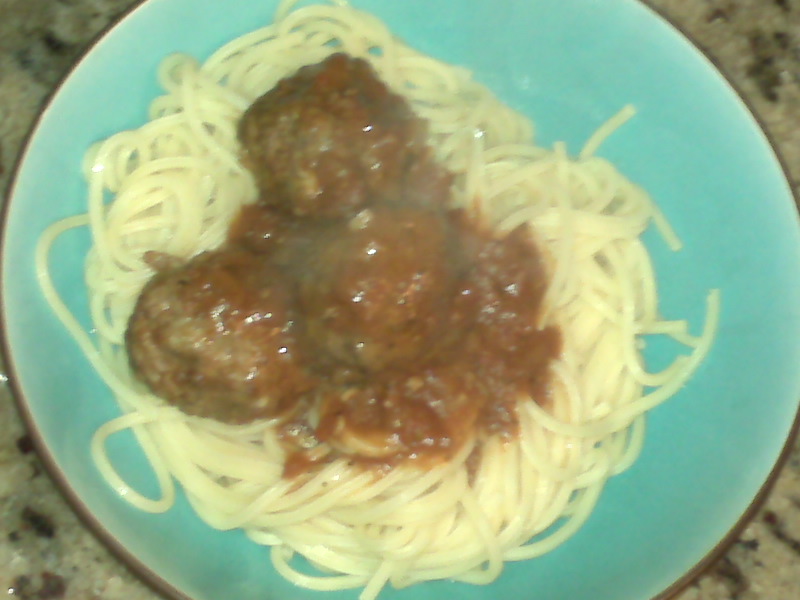
Garlic Meatballs in Chianti Sauce

For the Sauce:
generous splash olive oil
2 cloves garlic, minced
1 onion, minced
1 28-oz can crushed tomatoes
1 cup Chianti
1 T. fennel seeds
2 t. dried oregano
1 t. dried basil
1/2 t. crushed red pepper flakes
generous grind black pepper
salt to taste

For the Meatballs:
3/4 lb. 80/20 ground beef*
3/4 lb. ground pork
2 eggs
1 cup Italian-style breadcrumbs
1/2 c. very finely minced onion
1/4 c. Chianti
splash olive oil
2-3 large cloves garlic, pressed or very finely minced
2 t. fennel seeds
1 t. dried oregano
1 t. salt
1/4 - 1/2 t. crushed red pepper flakes
generous grind black pepper
1-2 T. bacon fat**
hot cooked, buttered spaghetti
grated pecorino

First, make the sauce. In a large, heavy bottomed pot, heat the olive oil over medium heat. Add the onion and garlic and saute for 2-3 minutes, stirring occasionally, until they become soft. Do not let the garlic burn. Next, add all the remaining ingredients. Cook, stirring occasionally, until the sauce begins to gently bubble. Cover, reduce to very low heat, and let the sauce simmer while you make the meatballs.


In a large bowl, combine all meatball ingredients except the bacon fat. Using your hands, mix until the mixture is consistent. Now, using your hands, form the mixture into golf ball sized balls. Do not pack them too tightly, just enough so that they stay together.


When the meatballs are all formed, heat a large frying pan (preferably cast-iron) over high heat. One your pan is hot, add a pat of bacon fat and let it coat the pan. Working in batches, add a few meatballs at a time to the pan and brown for 2-4 minutes, or until a nice brown crust has formed on the outside of each meatball and no pink remains. Add the meatballs to the pot containing the Chianti sauce.


Once all the meatballs are added to the sauce, pick up the pot and gently shake the pot until all the meatballs are immersed into the sauce. Shaking the pot instead of stirring with a spoon reduces the chances of your meatballs falling apart. Once the meatballs are immersed, cover the pot and simmer for 30 minutes. Spoon a few meatballs and sauce over piping hot buttered spaghetti, sprinkle with pecorino cheese, and serve with a glass of Chianti.

* Please don't desecrate my recipe by using a leaner blend of ground beef; you'll lose too much flavor.


** Always save the fat when you've cooked and drained bacon. It adds great flavor to recipes, and by saving it in a sealed container in the fridge, you save yourself a step when you want to add that flavor to a recipe!


Thursday, January 20, 2011

Around the World in Eighty Bites - Poland

If you ask people on the street what their favorite Polish foods are, most will say kielbasa and pierogies.  After all, spicy smoked sausage is pretty good, and so are those little dumplings that seem to be the blond-haired, blue-eyed love child of gnocchi and ravioli.  But there's far more to Polish cooking than kielbasa and pierogies.  Game meats, both freshwater and saltwater fish, hearty grains, and winter vegetables are featured in many Polish recipes, and a little flour, butter, and sugar can make magic with Poland's local fruits and berries. 

Poland shares borders with Germany and Russia, and these two influences can be seen in the frequent use of cabbage, beets, and buckwheat.  But Poland also received a Italian influence in the 16th century when a Polish king married an Italian queen, who brought with her a team of Italian chefs.  Porcini mushrooms, garlic, wine and leeks began cementing their places in the Polish kitchen, and they are still popular ingredients today. 

As a tribute to my readers in Poland, I steered clear of kielbasa and pierogies and decided instead to make Duck with Red Cabbage, a traditional dish that hasn't yet become synonymous with kuchnia polska here in the States.  Unfortunately, my grocery store was completely sold out of duck.  Normally I would have hopped from store to store in search of fresh duck, and I normally would not compromise the integrity of a recipe, but all bets are off during massive ice storms!  I substituted chicken thighs - not the same, but still delicious.

To accompany my Chicken and Red Cabbage, I made a batch of fluffy Potato Dumplings seasoned with garlic and smoked sea salt.  Just before serving, I tossed these in a skillet with some bacon drippings and butter.  Try these recipes for yourself if you want to experience a little taste of Poland on your palate!

Chicken with Red Cabbage

1 T. butter
2 oz. bacon or pancetta, chopped
1 onion, thinly sliced
4-6 skinless, boneless chicken thighs
1 head red cabbage, shredded
1 cup dry red wine
1 T. caraway seeds
salt and pepper to taste

Melt the butter over medium-high heat in a large, heavy-bottomed pot.  Add the bacon and cook for several minutes, or until it starts to crisp.  Next, add the onion and cook for about a minute more, stirring occasionally. 

Now, add the chicken.  Brown on both sides, then add the cabbage, red wine, and caraway seeds.  Reduce the heat to a simmer, cover, and cook for 25-30 minutes, or until chicken is fully cooked and the cabbage has softened up a bit.  Season to taste with salt and pepper, and serve with potato dumplings. 


Potato Dumplings

2 pounds potatoes, peeled
1 egg, beaten
1 T. smoked sea slat
1 T. garlic powder
1/4 cup flour, plus more for dusting

1 T. bacon drippings
1 T. butter

Cook 1 pound of the potatoes in boiling water until tender.  Mash, set aside to cool.  Grate the other pound of potatoes using the large holes of a box grater.  Squeeze any excess moisture from the grated raw potato.  In a large bowl, combine the mashed potato, grated potato, egg, salt, garlic, and 1/4 cup flour.  Mix well. 


Using your hands, form the potato mix into loosely packed balls the size of golf balls.  Working in batches, drop several at a time into salted boiling water and cook for approximately 5 minutes, or until they begin to float to the survace.  Remove with a slotted spoon, set aside on a plate. 

Once the dumplings are all cooked, melt the bacon drippings and butter in a large frying pan.  Add the dumplings and toss for a minute or so to coat.  Serve hot with Chicken and Red Cabbage.

Monday, December 20, 2010

Sunday Dinner, Sunday Drinks

As I'm writing this post, I'm watching the snow coming down outside my window.  My roommate's pup is curled up on the chair next to me, and I'm drinking a ginormous cup of hot coffee.  All perfect things to do when it's cold outside.  Other perfect things to do when it's cold outside?  Start a slow-cooked, stick-to-your-bones Sunday dinner, watch football, and enjoy a smooth, spicy cocktail!

Yesterday, I started the day with an Irish coffee made with cinnamon and vanilla infused whiskey.  This spice blend made the whiskey taste completely appropriate for the season, and I think it would be great served on the rocks, but it will also lend itself to plenty of delicious wintry cocktails, which I will explore at a later time.  For now, I'll give you the recipe for the whiskey, and recommend throwing a splash of it in your coffee. 

Last night's dinner consisted of a Bacon-wrapped Pork Roast, and Polenta with Gorgonzola and Sage.  A meal like this is best enjoyed when it's chilly outside.  I seasoned both the roast and the polenta with sage, fennel, garlic, and black pepper.  This spice combination compliments heavier foods extrremelly well, as the fennel and sage cut some of the richness to create a perfet balance of flavors.  The flavorful pork and the creamy polenta pair well with a cocktail made with scotch and Cardamaro, a spicy, bitter Italian liqueur similar to Amaro, but distilled from cardoons and artichokes.  Similar to a Godfather (my favorite drink) in that this is made from smoky scotch and an Italian liqueur, I appropriately named this new drink "The Consigliere."  Toast to Tom Hagen if you try one. 

Cinnamon and Vanilla Infused Whiskey

1 pint bottle Irish Whiskey (I prefer Jameson)
2 cinnamon sticks, cracked
1 vanilla bean, split down the middle

Start by removing about 1 shot from the bottle (a/k/a, do a shot).  Next, add the cinnamon pieces and vanilla bean to the bottle.  Close tightly, and shake for about 30 seconds.  Let sit for at least 24 hours, shaking occasionally. 

It is ready to go after 24 hours.  If you keep the vanilla and cinnamon in the bottle, it will continue to develop flavor.  If you like the seasoning to be subtle, remove them from the bottle (you  may have to strain it and re-bottle). 


Bacon-wrapped Pork Roast

1.5 pound pork loin roast
2 cloves garlic, minced
2 T. minced sage
2 t. rushed fennel seeds
generous amount of cracked black pepper
splash olive oil
4-6 slices center-cut bacon

Combine all the ingredients except the bacon in a large bowl.  Allow the pork roast to marinate for about 2 hours, turning it occasionally and rubbing the spices in with your hands. 

Preheat the oven to 500.  After the pork has marinated, lay the strips of bacon side-by-side on a small plate.  Place the pork roast in the center of the bacon strips.  Now, carefully pick up the plate and the roast, and invert it, placing the pork roast in a shallow baking dish so that the bacon-side is facing up (as shown). 

Use string or roast ties (they look like rubber bands but are oven-safe and heatproof), secure the bacon to the pork.  Now, place the baking dish on the center rack of the oven, and bake for 15 minutes at 500. 

Once this is done, reduce the heat to 275.  Do not open the oven door.  Cook for 1 hour to 1 hour 20 minutes (if you are using a meat thermometer, you want the center to register at about 155 degrees)

When the pork is done cooking, remove it from the oven and let it rest for about 10 minutes.  Remove the string or ties, and carve into slices with a sharp knife.  Serve alone, or make a gravy out of the pan drippings (I like mine plain). 

Polenta with Gorgonzola and Sage

2.5 cups water
2 t. cracked fennel
1/2 cup instant polenta (I prefer Pastene brand)
3 T. chopped sage
2 T. butter
2 oz. mountain gorgonzola (also called "gorgonzola piccante")
salt and pepper to taste

In a heavy-bottomed saucepan, combine the water and cracked fennel.  Bring the water to a rolling boil.  Add the polenta in a slow stream, stirring constantly.  Continue stirring.  The polenta will start to thicken up; at this point, add the sage, butter, gorgonzola, salt and pepper (you may want to go easy on the salt; gorgonzola tends to be salty).  Continue to stir - do not stop stirring, or the polenta will become lumpy and stick to the pan. 

Once the polenta is thickened, pour it into a shallow baking dish.  Spread it with a spatula so that it is about 1/2" thick.  Let the polenta "set" for a few minutes, and serve in slices along with the pork roast. 


The Consigliere

1.5 oz. smoky Scotch (I like Islay single-malts, such as Ardbeg)
1.5 oz. Cardamaro
1 oz. Limoncello

Combine in a tumbler over 2 ice cubes.  Stir, sip, and stay off the road. 


The Wartime Consigliere

This version adds Grappa, a fiery, potent liqueur made in Italy from the remnants of wine grapes

Follow the recipe above, using only 1/2 oz. limoncello.  Add 1/2 oz. grappa.

Monday, December 13, 2010

Sunday Funday!

After spending the last several Sundays being too lazy to do much of anything, I finally had some motivation this week to whip together some great food and drinks!  Yesterday was the perfect Sunday Funday – it was raining cats and dogs, so I did not feel bad about sitting on my duff in my pajamas, eating, day drinking, and watching football and hockey all day.

Before I get to the recipes, I have to share my belief as to what constitutes a great Sunday Funday.  The presence of good friends (or at least cool roommates) is key, and you must be wearing cozy, comfy clothing.  If you’ve gone out the night before and you’re not feeling so chipper in the morning hours, that’s OK; Sunday Funday is all about starting off with a little “hair of the dog” and continuing from there.  Good breakfast food and drinks, some munchies, some substantial food, good company, and a few good games are just what the doctor ordered! 

I kicked off my Sunday Funday with the perfect brunch cocktail – the “Bourbellini.”  I am not much of a bourbon drinker, I’m a scotch girl.  However, I’m a firm believer that scotch should not be poured before noon.  Enter Bourbon.  Bourbon is sweeter; it is not smoky like scotch, and therefore, it is perfect for my two brunch recipes, The Bourbellini, and Bacon & Bourbon French Toast.  

I created Bacon & Bourbon French Toast because I love the taste of bacon combined with maple syrup, and I wanted to showcase that flavor combination in a recipe.  I also love French Toast, so I decided to stay true to my title and make French Toast containing bacon, butter, and booze.  Rich, satisfying, and unique, this may have to be my go-to weekend breakfast from now on. 

For my snack dish, I managed to replicate Estragon’s Garbanzos Fritos, or fried chickpeas.  Crunchy and flavorful, serve them in a bowl and eat them like popcorn.  They’re a lot more satisfying!  And for the main dish, I cooked up my Halftime Steak, named as such because it takes no longer than an average halftime break to prepare and cook. 

There are only a few weeks of football left, so I suggest you shop for these ingredients on Saturday, gather the troops, and treat yourselves to these recipes on your next Sunday Funday! 


Bourbellini

1 oz. bourbon
1-2 oz. peach nectar
champagne or sparkling wine

Pour the bourbon and peach nectar into a champagne flute or wine glass (or a pint glass, depending on your style).  Fill the rest of the glass with champagne/sparkling wine, stir gently.  (makes 1)

WARNING:  This is a prime example of a danger drink, so do me a favor and don’t drive if you’re drinking these babies...


Bacon & Bourbon French Toast

4 slices center-cut bacon
4 large eggs
2 oz. bourbon
8 slices spongy bread (plain white is fine, as long as it’s fresh)
butter
Powdered sugar
Maple syrup


In a frying pan with a large cooking surface (big enough to hold at least 2 slices of bread), cook the bacon over medium-high heat until crisp.  Turn off heat, remove the bacon from pan and set aside on paper towels; do not drain the bacon fat from the pan, but remove any charred bits.

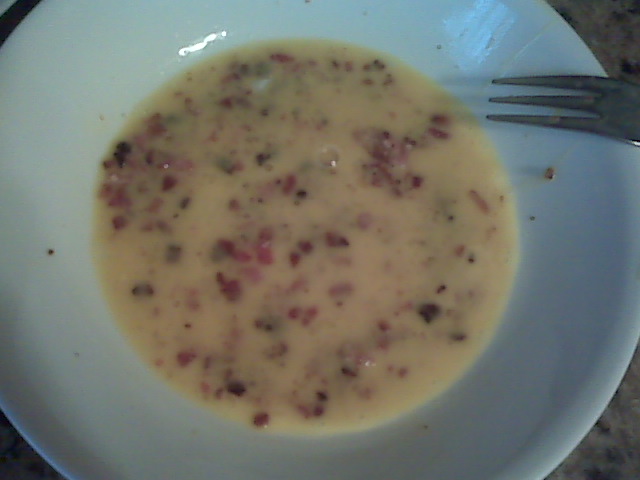
Once the bacon has cooled enough to touch, crumble it into very small pieces (you may have to use a knife and chop it a little if it’s not crispy enough to crumble using your hands).   Place the crumbled bacon in a shallow dish large enough to lay one slice of the bread completely flat.  Add the eggs and the bourbon to this dish, and beat the egg, bacon and bourbon mixture with a fork or whisk until the eggs’ yolk and white are completely blended. 

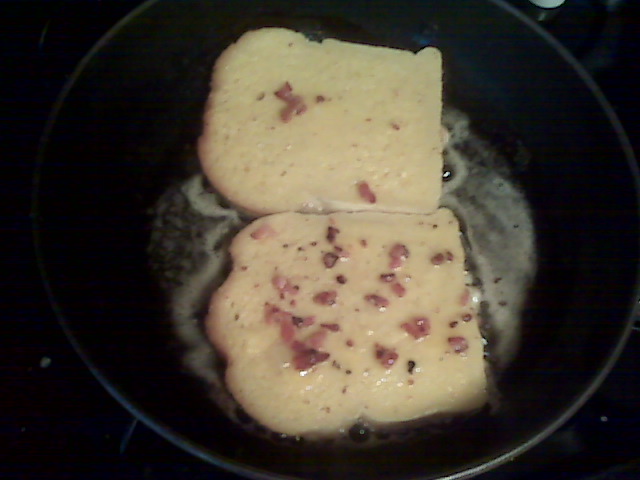
Place the pan containing the bacon drippings over medium heat, and add a pat of butter.  In the meantime, lay one of the slices of bread in the egg mixture until it is completely coated on one side; flip it over and repeat so that both sides of the bread are completely covered with the egg mixture.  Now, add the coated bread to the pan with the bacon drippings, and fry for a minute or two on each side, or until the bread begins to turn golden brown.  Repeat with the remaining slices (you’ll probably have to work in batches), removing with a spatula and adding a little extra butter to the pan between batches (if necessary). 

Serve in stacks of 2-4 slices, dusted with a bit of powdered sugar.  Offer maple syrup, extra butter, and Bourbellinis! 


Garbanzos Fritos

1 can chickpeas, drained
splash olive oil
1/2 t. ground cumin
1/4 t. garlic powder
1 t. smoked paprika
1/2 t. fine sea salt
1 T. chopped fresh parsley

Dry the chickpeas completely, using paper towels.  This is a very important step; if they are not completely dry, they will not fry correctly. 

Heat a frying pan with deep sides over high heat, and add a generous splash of olive oil to completely coat the bottom of the pan.    Add the chickpeas to the pan and cook, shaking occasionally, until you can hear the chickpeas "pop."  If you have a splatter guard, you may want to use it.  This should take about 8 minutes.  You may have to work in batches, depending on the size of your pan. 

Drain the fried chickpeas on a paper towel, then add to a bowl and toss with all remaining ingredients until chickpeas are completely coated.  Serve warm.


Halftime Steak

2 steaks, about 1 inch thick (I use sirloin or filet mignon)
1 clove garlic, halved
kosher salt
coarsely ground black pepper
butter, softened
several paper-thin slices of garlic (think Goodfellas!)

Before kickoff, place your steaks out so that they've reached room temperature by halftime.

As soon as the 2nd quarter ends, heat a heavy-bottomed frying pan, preferably cast-iron, over high heat.  In the meantime, rub the steaks with the garlic clove halves, and then season each side of the steaks with a pinch of kosher salt and a generous coating of black pepper.

Once the steaks are seasoned, check to see if your pan is ready.  If you fling a few drops of water on the surface, they should bead up and dance across the pan rather than staying put and sizzling. 

Once the pan is ready, throw a few pinches of kosher salt into the pan, then add the steaks.  Sear for 1-3 minutes per side, using tongs to turn them over.  (Note:  This timing will result in a rare steak.  If you want yours medium or well, it takes longer.  Not sure how much longer; I eat my steak rare!)

Remove the steaks from the pan and set aside to rest for approx. 5 minutes.  This is very important that you do not touch the steaks while they rest; this step distributes the juices. 

When the steaks are ready to serve, sprinkle a few paper-thin slices of garlic on each one, and top with a pad of butter.  Once the butter has melted, they're ready to eat!  Good accompaniments are baked potatoes or seasoned boiled rice (I prefer rice with a dab of Aji Sauce, a recipe I am still trying to perfect and will post once I'm satisfied).

Monday, November 1, 2010

Linguine Carbonara with Bacon, Butter and Booze

Before I begin the discussion of my latest recipe, let me explain why I’m not profiling Italy in my Around the World in Eighty Bites project – definitely not because I don’t want to honor my Italian readers, but it seems redundant, considering that 90% of my culinary knowledge centers around Italian food and 80% of my recipes are either Italian or Italian-inspired.  I wouldn’t even know where to begin!  Making me choose one recipe to represent Italy would be like making me choose between The Rolling Stones and Led Zeppelin, so instead of cooking one representative dish, I’ll just give one big grazie to my Italian readers and express my envy that they get to live where pecorino and prosciutto are made! 


This weekend, I made biscotti, which requires egg whites.  In turn, I had egg yolks left over.  Not one to waste food, I needed to come up with a recipe using those egg yolks, and I decided on Linguine Carbonara.    


Carbonara is a very popular, very rich dish characterized by the presence of cured pork, eggs, cheese, and lots and lots of black pepper.  It is traditionally made with spaghetti, but any long pasta can be used.  Some versions use cream, some do not.  The type of pork used varies; some cooks use pancetta, some use guanciale, and some use plain old all-purpose bacon.  Americanized versions of the dish tend to feature other ingredients, such as grilled chicken, mushrooms, or peas, but these are not used in the Italian version.  My version stays closer to the traditional Italian recipe, and it includes Italian bacon (pancetta), butter, and booze!  Where I stray is in the addition of the egg at the end – in the traditional version, the raw egg is added at the last minute and cooked no further, letting the heat from the pasta cook the egg.  In my version, the egg and wine are added together, which requires an extra minute of cooking to guarantee that the egg cooks through.  You do not have to use only the eggs’ yolks for this recipe; I did so because I had them.  Whole eggs also work fine, and using whole eggs will result in a lighter texture than using mainly yolks.  Because this dish is extremely rich, a small serving goes a long way. 


Linguine Carbonara

1 pound linguine
½ stick butter
4 oz. pancetta, sliced into small strips
1 small onion, minced
1 whole egg + 2 egg yolks (you can substitute two whole eggs)
2 T. dry white wine
2 T. coarsely ground black pepper
½ cup grated parmesan cheese
Salt to taste


Cook the pasta.  In the meantime, melt the butter over medium-high heat in a large, heavy bottomed pan large enough to accommodate all the cooked pasta.  Once the butter has melted, add the pancetta and cook, stirring frequently, for about 2-4 minutes.  Once the edges begin to crisp, lower the heat, and add the onion and cook for another minute or so until the onion turns translucent. 


While the pancetta and onion cook, place the egg and yolk in a small bowl.  Add the wine and pepper, and beat with a fork or a small whisk until the ingredients are completely blended.  Set aside. 


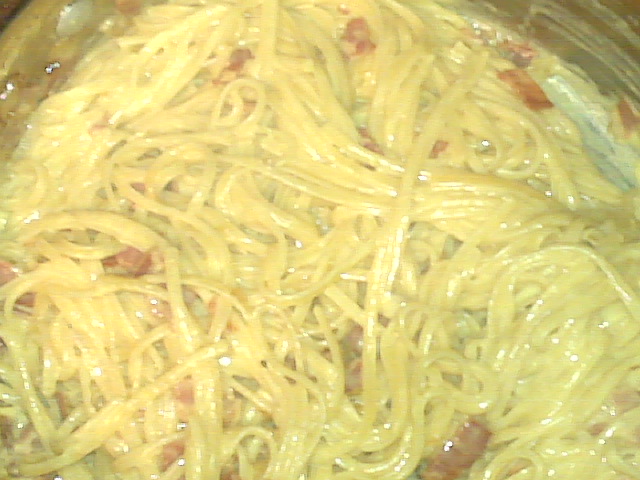
Once the pasta has cooked, drain it and add it to the pan with the pancetta and onion.  Add the cheese and salt, and stir until the cheese is melted.  Now, slowly add the egg/wine mixture, constantly tossing the pasta, until each strand is coated with the mixture.  Cook for 1-2 minutes, or until the egg begins to firm up and adhere to the pasta.  Serve immediately.